
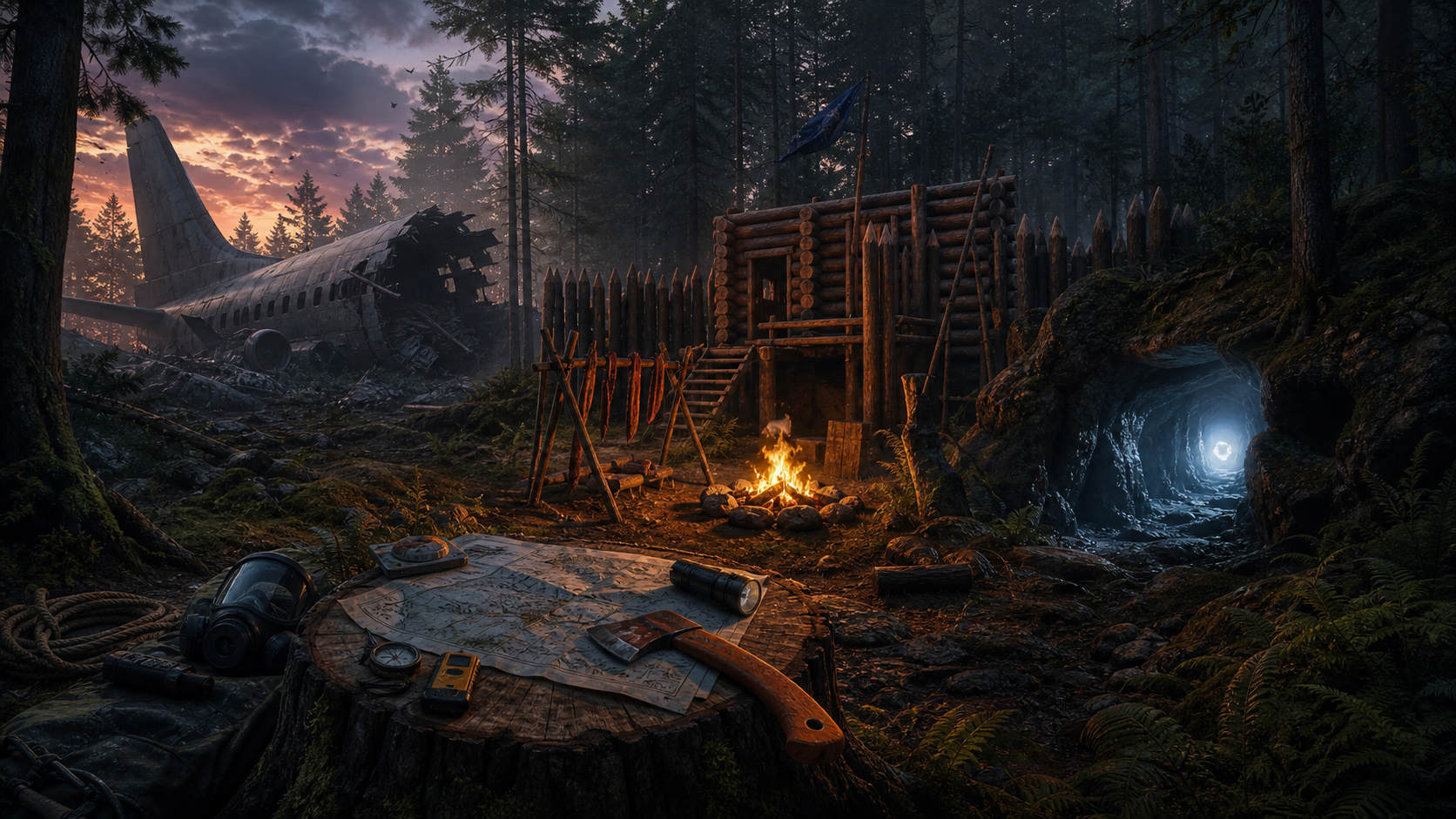
Quick Answer
The safest base is not the biggest base. Choose a place with water or easy water access, food routes, clear sightlines, manageable patrol pressure, and enough space to defend without blocking your own movement.
Location checklist
| Factor | Good sign | Risk sign |
|---|---|---|
| Water | Nearby water or reliable collector plan | Long risky walks for thirst |
| Food | Animals, fish, berries, or drying rack flow | No food route near camp |
| Patrols | You can observe and avoid routes | Camp sits directly on a patrol line |
| Visibility | You can see threats before they reach walls | Dense cover hides enemies at your door |
| Expansion | Space for storage, racks, traps, and repair | Terrain forces awkward walls and blocked gates |
| Cave access | Key caves are reachable but not on top of camp | You must cross heavy patrol zones every trip |
Base style choices
- Small starter camp: best for learning and staying quiet.
- Cliff or water-edge base: strong defense, but check access and escape routes.
- Island base: safer from some pressure, but logistics can be annoying.
- Forest interior base: convenient resources, but patrol awareness matters.
Common mistakes
- Building where the view is pretty but patrol pressure is constant.
- Cutting every nearby tree and losing cover without improving defense.
- Making walls so large that repair becomes the entire game loop.
- Forgetting backup exits and getting trapped inside your own base.